A holistic approach to restoring calm, clarity, and balance
Anxiety is more than occasional worry. It can feel like a mind that never switches off, a body that remains tense, a racing heartbeat, disturbed sleep, digestive discomfort, or an unexplained sense that something is wrong. When these feelings become persistent, difficult to control, or begin affecting daily life, relationships, work, or health, they deserve compassionate and professional attention.
At Samanvaya Healing, anxiety is approached through the connection between body, mind, lifestyle, and inner awareness. Ayurveda and Yoga may provide valuable supportive tools, but they should complement—not replace—appropriate mental-health evaluation, counselling, or medical treatment when these are needed.
What Is Anxiety?
Anxiety is the body’s natural response to a perceived threat or stressful situation. In the short term, it can help us stay alert and prepared. However, when fear or worry continues even in the absence of immediate danger, the nervous system may remain in a prolonged state of overactivity.
Common symptoms include:
- Excessive or uncontrollable worry
- Restlessness, irritability, or a constant feeling of uneasiness
- Difficulty concentrating or making decisions
- Palpitations, sweating, trembling, or rapid breathing
- Tightness in the chest or muscles
- Digestive disturbances, nausea, or altered appetite
- Fatigue despite adequate rest
- Difficulty falling asleep or staying asleep
- Avoiding people, places, or situations because of fear
- Repeated thoughts that something bad may happen
Anxiety can have several forms, including generalized anxiety, panic disorder, social anxiety, phobias, and anxiety associated with health conditions or stressful life events. A qualified mental-health professional should make the clinical diagnosis.
Anxiety from an Ayurvedic Perspective
Ayurveda understands health as a state of balance among the body, senses, mind, and consciousness. Symptoms resembling persistent anxiety may be understood in relation to Chittodvega—agitation or disturbance of the mind—and imbalance involving the Manovaha Srotas, the channels associated with mental functioning.
Anxiety commonly shows features of aggravated Vata Dosha, especially its qualities of movement, instability, dryness, and irregularity. This may appear as racing thoughts, fear, restlessness, tremors, constipation, variable appetite, and disturbed sleep. In some individuals, Pitta may also be involved, producing irritability, perfectionism, anger, heat, acidity, or excessive self-criticism. Increased Rajas can make the mind overactive, while Tamas may later manifest as dullness, withdrawal, or low motivation.
This does not mean that everyone with anxiety has the same imbalance. Prakriti, digestion, sleep, menstrual or hormonal health, medical conditions, medication, stressors, and emotional history must all be considered before creating a plan.
Ayurvedic Management of Anxiety
1. Nidana Parivarjana: Identify and Reduce Triggers
The first step is to understand what repeatedly disturbs the system. Irregular meals, excessive caffeine, late nights, continuous screen exposure, overwork, unresolved stress, lack of movement, and overstimulation can all contribute to anxiety symptoms. A symptom and trigger diary may help reveal patterns.
2. Establish a Grounding Daily Routine
A regular routine gives stability to an overactive nervous system:
- Wake up and sleep at consistent times.
- Eat freshly prepared meals at regular intervals.
- Begin the morning calmly instead of immediately checking the phone.
- Include gentle movement, breathing practice, and quiet reflection.
- Create a slow evening transition with dim lights and less digital stimulation.
Small routines followed consistently are often more helpful than an elaborate plan followed occasionally.
3. Choose Warm, Nourishing, Easily Digestible Food
When Vata-like symptoms are prominent, warm and freshly cooked food may be more settling than very cold, dry, or highly processed meals. Depending on individual digestion, meals may include khichdi, vegetable soups, dal, soft-cooked grains, seasonal vegetables, and a suitable quantity of healthy fats.
Limit excessive tea, coffee, energy drinks, alcohol, nicotine, long gaps between meals, and frequent consumption of very spicy or packaged food if they worsen symptoms. Dietary advice should always be adapted to Agni, Prakriti, health conditions, and personal needs.
4. Abhyanga and Sensory Calming
Gentle self-massage with an individually suitable warm oil may help create a sense of grounding and relaxation. A calm environment, soothing music, time in nature, warm bathing, and reducing unnecessary noise or multitasking can also support the senses. Oil selection and therapeutic procedures should be advised by an Ayurvedic physician, especially during pregnancy or in the presence of skin or medical conditions.
5. Ayurvedic Medicines: Individualised, Not Self-Prescribed
Ayurvedic physicians may consider Medhya Rasayana or other formulations after assessing Dosha, Agni, sleep, bowel pattern, associated illness, and current medicines. Herbs and formulations are not universally suitable and may interact with medicines or be inappropriate during pregnancy, breastfeeding, thyroid disorders, liver disease, autoimmune conditions, or before surgery. Avoid self-medication and use only quality-controlled products under qualified supervision.
Yoga for Anxiety: Moving from Reactivity to Awareness
Yoga is not only physical exercise. It combines movement, regulated breathing, attention, relaxation, and self-awareness. Research suggests that Yoga may help some people manage anxiety symptoms; however, evidence for treating diagnosed anxiety disorders is still developing. It is best used as part of an integrated plan rather than as a substitute for psychotherapy or prescribed medication.
Gentle Asana Practice
A calming sequence may include:
- Tadasana for stability and body awareness
- Marjariasana–Bitilasana for gentle spinal movement
- Shashankasana or supported Balasana for rest and inward attention
- Baddha Konasana with support for relaxation
- Setu Bandhasana with appropriate support
- Viparita Karani when medically suitable
- Shavasana for conscious relaxation
The practice should be slow, comfortable, and free from competition. Strong backbends, fast Surya Namaskar, prolonged inversions, or intense breathwork may feel overstimulating during acute anxiety and should be modified under guidance.
Pranayama for Nervous-System Regulation
Breathing practices can help shift attention from repetitive thoughts to the present moment. Suitable practices may include:
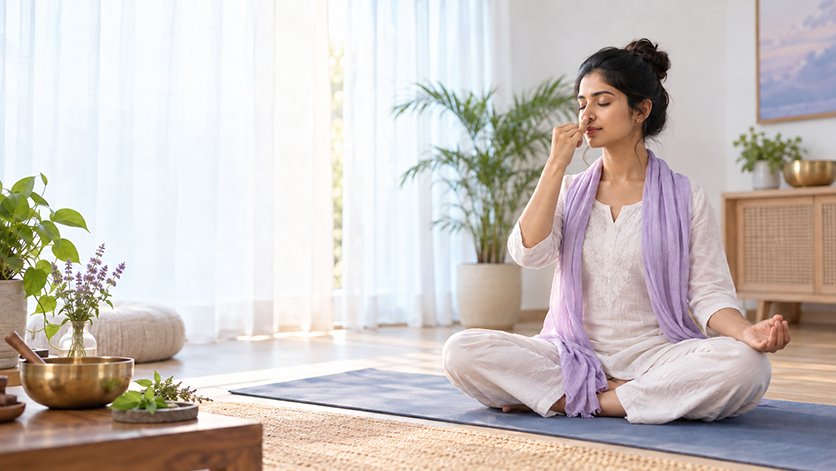
Nadi Shodhana: Gentle alternate-nostril breathing may encourage steadiness and balanced attention. Practise without breath retention initially.
Bhramari Pranayama: A slow exhalation with a soft humming sound can create a soothing internal vibration and may help reduce mental restlessness.
Slow diaphragmatic breathing: Allow the breath to become comfortable and quiet, with a slightly longer exhalation—without strain, force, or breathlessness.
Forceful practices and prolonged Kumbhaka should not be attempted during panic, uncontrolled hypertension, pregnancy, serious cardiac or respiratory illness, or without individual instruction.
Meditation and Relaxation
Start with two to five minutes rather than forcing a long meditation. Helpful options include breath awareness, Yoga Nidra, guided relaxation, mantra Japa, or observing thoughts without judging them. If closing the eyes increases distress, practise with a soft gaze or under professional guidance.
A Simple 15-Minute Calming Routine
This general routine is suitable for many beginners, but it should be modified when necessary:
- Body awareness – 2 minutes: Sit comfortably and notice contact with the floor or chair.
- Gentle movement – 4 minutes: Practise slow neck, shoulder, and spinal movements within a pain-free range.
- Nadi Shodhana – 3 minutes: Breathe gently without retention.
- Bhramari – 5 to 7 rounds: Hum softly and keep the face and jaw relaxed.
- Quiet rest – 3 minutes: Observe the natural breath without trying to control it.
Stop if you feel dizzy, breathless, panicky, or uncomfortable. Regular short practice is preferable to occasional intense practice.
Supporting Recovery in Daily Life
Along with Ayurveda and Yoga, recovery may be supported by:
- Regular sleep and wake timings
- Daily walking or suitable physical activity
- Morning sunlight exposure
- Balanced meals and adequate hydration
- Reducing caffeine and alcohol
- Maintaining supportive social connections
- Journaling worries and practical next steps
- Setting boundaries around work and screen time
- Counselling or evidence-based psychotherapy, including cognitive behavioural approaches, when indicated
- Taking prescribed medication consistently and discussing any change with the treating clinician
Never stop psychiatric medication suddenly or replace it with herbal products without guidance from the prescribing professional.
When to Seek Professional Help
Consult a qualified professional when anxiety:
- Persists for weeks or repeatedly returns
- Interferes with sleep, work, study, relationships, or routine activities
- Causes panic attacks or significant avoidance
- Is accompanied by depression, substance use, or troubling physical symptoms
- Does not improve with self-care
Chest pain, fainting, severe breathlessness, or a new irregular heartbeat should not automatically be assumed to be anxiety; urgent medical assessment may be necessary.
A Personalised Path Towards Balance
Anxiety is not a sign of weakness, and healing does not require you to manage everything alone. With timely support, a suitable daily routine, professional mental-health care when required, and individually guided Ayurveda and Yoga, it is possible to build greater steadiness and resilience.
At Samanvaya Healing, the aim is to understand your symptoms as part of your complete health picture and develop a personalised, practical approach that supports harmony of body, mind, and soul.
Take the First Step Towards Better Balance
Receive personalised Ayurveda, lifestyle, and Yoga guidance based on your individual health needs.
Book an Online Consultation with Vd. Jhanvi Sarvaiya
M.D. (Swasthavritta & Yoga) Ayurvedic Physician | Yoga Therapist
Call or WhatsApp: +91 84870 53240
Online Video/Call Consultation | Prior Appointment Required